

- cross-posted to:
- technology@lemmy.world
- cross-posted to:
- technology@lemmy.world
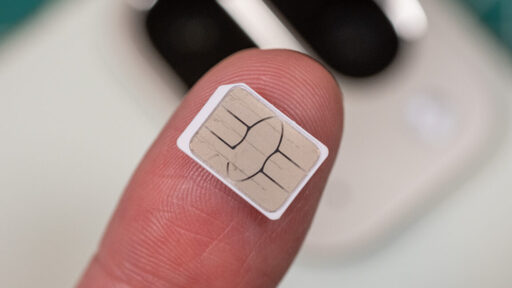
Swapping SIM cards used to be easy, and then came eSIM.
You must log in or register to comment.
It depends on what you change more often.
If you change your provider more often, than eSIMs are fine. You don’t have to wait for anything in the mail, or go to a store.
If you (me) keep your provider for a couple decades, a physical SIM card can be moved to any new phone at any time, without even needing to talk to your provider. Never mind asking them to approve your new niche little phone they’ve never heard of, and don’t know will work (it will)
I moved to eSIM a few years ago and I had to switch back to physical.
I have 5 esims and swap betwen them offten, click and done. SIMs are a pita.
Seems to be migration to phones every other week for reviews is an issie but not one most people are going to have ? I’ve had the same phone for years now
I think the nightmare starts when your phone stops working completely, I experienced this without eSim and it was already complicated for a switch, I guess eSim adds some problems, but overall I think it still makes things easier, especially when you travel and the roaming fees are too expensive
What are your use cases for all those SIMs?
Three uses I could see:
- Personal
- Work (if no work phone)
- Travel (providers like Saily allow you to take a temporary sim for a country you’re visiting, basically what used to be the people selling sims at the airport. eSIM makes it less shady and basically one-click) [maybe multiple of these if they travel often because different providers are better in certain regions]
deleted by creator
Until you have to move them to another phone. Especially if there is special provisioning on the SIM that you have to call the carrier to provision every time a new eSIM is issued, since few scenarios let a direct eSIM copy occur. (Apple may be the only one.)
I’ve been using Google Fi for the last few Pixel phones I’ve been on. Each time I’ve switched, during setup I just get asked if I’d like to activate the phone (with a warning that my old one will be deactivated) and I click yes. It’s then active before I can even complete the phone’s OOBE setup.
Android also does apparently have a “copy to another device” function mentioned here, but they hint to what you said regarding carrier limitations applying. Though Apple’s quick eSIM transfer has a similar note as well.
Definitely seems like a “When it all lines up, it can be convenient, but when it doesn’t you’re fucked” situation.
My phone provider requires you contact them to authorise the esim swap (even if you are signed into their app on both phones). I wonder if they do that too make SIM stealing easier
Google Fi definitely has a smooth experience, even to/from pSIM, eSIM, and no real need for special SIM features. They implemented that very well. Now, every tier 1 carrier in the US, eeeeeeek!
I personally like eSIM. I have an app by my phone provider where I can just create or move a eSIM in minutes.
And additionally, I can just create a new eSIM with a new number in just about the same time. When my wife got a new phone, I just created a new eSIM for her old phone. This way, she could use them both for a week or two.
So you’re now fully bound to your ISP, their proprietary shit app, and their servers providing you a new SIM instead of just swapping a physical piece of hardware in seconds. Getting new SIMs in an ideal condition is the only advantage.
So you’re now fully bound to your ISP
Do you think you can only use an eSIM on a locked phone? Physical SIM or not, a carrier locked phone is a locked phone. You can use eSIMs on unlocked phones just fine
their proprietary shit app, and their servers providing you a new SIM instead of just swapping a physical piece of hardware in seconds
The difference is you don’t have to physically go someplace to get a card or have one shipped to you. You just need the Internet and an app.
You’re complaining about semantics with no real difference, just convenience 99% of the time.
I used an eSIM a few years ago, but it always felt iffy and reminded me too much of Verizon’s old CDMA networks where the phones had no SIMs and were permanently tied to the carrier no matter what. Then my phone (Pixel 7 Pro) decided to take a shit, leaving me with no phone number for several days while I waited for the replacement SIM.
eSIMs have their place for secondary lines, like a different carrier for certain low-service situations that pop up here and there in my area, but otherwise I now only run a physical SIM for my main line.
Out of curiosity, what sort of reasons do people have to switch out their SIM? I haven’t done that in a long time myself, but I might not be the typical user.
Phone manufactures, who create some very good smartphones but put inside of them only 1 physical Sim slot, what forces you to either choose another model or start using eSim.