

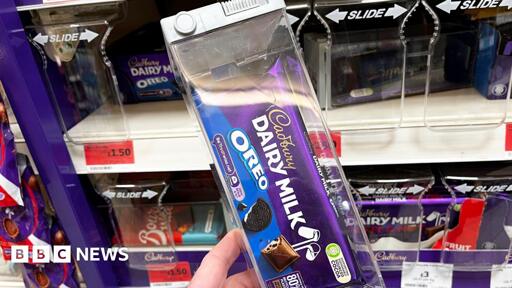
Chocolate bars are being locked in plastic boxes in some UK shops as retailers and police forces warn thieves are stealing them to order.
Sainsbury’s said it had begun using “boxes on products which are regularly targeted”, with £2.60 bars of Cadbury Dairy Milk locked up in one London branch.
Chocolate was more recently being “sold on by criminals and is now being targeted more frequently by prolific offenders,” according to the Association of Convenience Stores (ACS).
I suppose I’m trying to tie the disconnect between their costs and their stock value. In my mind, these two metrics would be intimately tied together such that as costs increase, their stock value decreases as they try to keep prices level to compete.
I’m not seeing that trend, it really seems like they’re still rewarding their shareholders whilst passing the costs on to the consumer. I simply do not buy their poverty argument
In a rational stock market (and there are numerous reasons why that might not apply) the value of a share reflects the expected future earnings from holding the share. The expected future earnings come in the form of dividends that the company distributes from the profit they make. So if a retailer’s costs increase, they put prices up to maintain the exact same profit, and sales do not fall, then you would not expect share price to change, because you would not expect any change to the future earnings from holding a share.
Of course, when prices change, it influences sales. But not always in the same way (because goods can be more or less elastic or - less so at supermarkets - luxury goods) and not always predictably; and since the expectation is about predicting behaviour, that means share price doesn’t even necessarily reflect what actually happens.